




Shown goods: from 1 to 3 (3 total)
In stock
Promotions
Discounted
| Code | photo_camera | Remains | shopping_cart | ||||||
|---|---|---|---|---|---|---|---|---|---|
| 025713 | 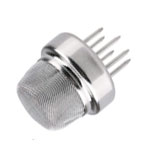 | Sensor MQ135 gas leak sensor | 26 pcs |
| WINSEN | ||||
| 028112 | | Sensor MQ-8 | 4 pcs |
| WINSEN | ||||
| 028113 | 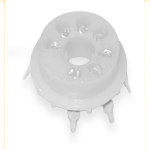 | Socket Soket MQ 7 pin | 46 pcs |
| WINSEN |
Gas impurity sensors - sensors for detecting the presence or measurement of the concentration of gas impurities of a certain type or groups of gases.
Basic types:
Basic types:
- metal oxide
- electrochemical
- catalytic
Electrochemical sensors can be solid or liquid. They are current cells with two electrodes. The basic components of two-electrode sensors are the measuring electrode, the counter electrode and the ion conductor between them. When a toxic gas (eg carbon monoxide) comes into contact with the measuring electrode, an oxidation reaction starts. In an ionic conductor, electrons move and a chemical reaction occurs on the opposite electrode. As a result of an electrochemical reaction, the cell creates a potential difference (EMF), which is the response of the sensor. The sensor detects the presence of gas by measuring the current between the two electrodes.
Catalytic sensors. Combustion of gas on a heated catalyst generates heat, which is measured by a gas sensor. So the principle of operation is based on the linear dependence of the released heat on the gas concentration. Such sensors are practically independent of the ambient temperature and humidity. Catalytic sensors consist of two elements: a detector and an inert compensator. Explosive gases only burn on a sensitive detector, which leads to an increase in temperature and, accordingly, resistance. Gases do not burn out on the expansion joint, its resistance and temperature remain unchanged.
