




Shown goods: from 1 to 16 (16 total)
In stock
Promotions
Discounted
| Code | photo_camera | Remains | shopping_cart | ||||||
|---|---|---|---|---|---|---|---|---|---|
| 018097 |  | Ultrasonic sensor NU40A14T/R-1 (pair) Waterproof ultrasonic distance sensor. Receiver and transmitter. 40.0±1.0KHz; 80° ±15°(-6dB); 0.2~2M; Ø14h9 The transmitter is marked with a red dot and the receiver with a black dot. | 21 pcs |
| |||||
| 021855 | 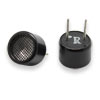 | Ultrasonic sensor NU40C10T-1 Receiver only! | 58 pcs |
| |||||
| 022999 |  | Spare Piezo disc for mist maker, diameter 20 mm Spare piezo disc for nebulizers and ultrasonic mist makers | 93 pcs |
| |||||
| 023000 |  | Ultrasonic Mist maker, 24V Ultrasonic mist maker. | 157 pcs |
| |||||
| 023001 |  | Ultrasonic Mist maker 24V +LED Ultrasonic mist maker with LEDs. Great for relaxation souvenirs. | 118 pcs |
| |||||
| 030214 |  | Ultrasonic Mist maker, black housing Ultrasonic mist maker. | 119 pcs |
| |||||
| 030215 |  | Ultrasonic Mist maker +LED, black housing Ultrasonic mist maker. Great for relaxation souvenirs. | 88 pcs |
| |||||
| 047434 | 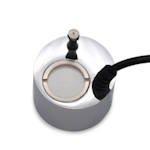 | Ultrasonic Fog generator, 24V 38mm Ultrasonic fog generator. | 56 pcs |
| |||||
| 047437 |  | Raft for ultrasonic foggers white A floating raft with a roof to hold an ultrasonic fogger on the surface of the water. | 26 pcs |
| |||||
| 047438 |  | Ultrasonic Fog generator 5V USB donut humidifier white Donut Shape USB Powered Portable Humidifier | 75 pcs |
| |||||
| 050989 |  | Ultrasonic fog generator, 5V | 76 pcs |
| |||||
| 050990 |  | Ultrasonic Fog generator, 12V Ultrasonic fog generator. | 113 pcs |
| |||||
| 051470 | 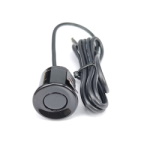 | Ultrasonic sensor GU14A01L01-A03 | 98 pcs |
| INGHAI | ||||
| 051471 | | Ultrasonic sensor GU16B01L01-A17 | 97 pcs |
| INGHAI | ||||
| 051473 | 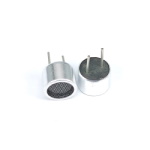 | Ultrasonic sensor GU1007C-40TR | 65 pcs |
| INGHAI | ||||
| 053429 |  | Ultrasonic Fog generator, 5V white | 44 pcs |
|
Ultrasound - sound waves having a frequency higher than those perceived by the human ear, usually, ultrasound is understood as frequencies above 20,000 hertz.
Although the existence of ultrasound has been known for a long time, its practical use began quite recently. Nowadays, ultrasound is widely used in various physical and technological methods. So, according to the speed of sound propagation in a medium, one can judge its physical characteristics. Velocity measurements at ultrasonic frequencies make it possible, with very small errors, to determine, for example, the adiabatic characteristics of fast processes, the values of the specific heat capacity of gases, and the elastic constants of solids.
The frequency of ultrasonic vibrations used in industry and biology ranges from several tens of kHz to a few MHz. High-frequency vibrations are usually created using piezoceramic transducers, for example, barium titanite.
Typically, ultrasonic sensors are used to determine the distance in a gas environment by determining the response time of the reflected wave.
Ultrasonic emitters are also used for cleaning in ultrasonic baths. Ultrasonic cleaning is a method of cleaning the surface of solids in washing liquids, in which ultrasonic vibrations are introduced into the liquid in one way or another. The use of ultrasound usually significantly speeds up the cleaning process and improves its quality. In addition, in many cases it is possible to replace flammable and toxic solvents with safer detergents without losing the cleaning quality.
Ultrasonic cleaning is used in many industries, in the repair of machines and mechanisms, in jewelry and restoration, in medicine, in everyday life, etc.
Cleaning occurs due to the combined action of various nonlinear effects that occur in the liquid under the influence of powerful ultrasonic vibrations. These effects are: cavitation, acoustic currents, sound pressure, sound capillary effect, of which cavitation plays a decisive role. Cavitation bubbles, pulsating and collapsing near pollution, destroy them. This effect is known as cavitation erosion.
