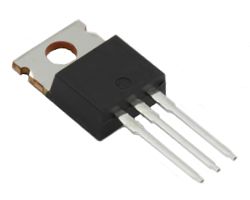
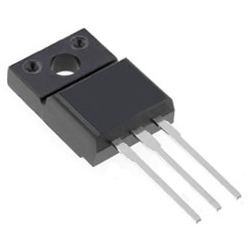
Used to improve heat transfer between heat-generating components of electronic circuits (processors, power transistors, diodes) and the heat sink, as well as between a temperature sensor and a heat-generating component. It is a heat-resistant white paste of high viscosity.
It is not a dielectric, so if the component must be electrically insulated from the heat sink, a mica pad must be installed.
Made by thickening polydimethylsiloxane fluid with zinc oxide powder. Factory packaging — 4 kg tin cans.
Technical specifications:
- White color.
- Explosion-proof, non-flammable, chemically inert, non-irritating and non-toxic to humans.
- Corrosive effect: no green deposit on a copper plate within 24 h.
- Operating temperature range: -60 to +180 °C
- Density: 2.6—3.0 g/cu.cm
- Volume resistivity: min 1012 Ohm·cm
- Breakdown voltage for a 1 mm layer at 50 Hz: min 2 MV/m.
- Relative permittivity (max):
50 Hz — 6.0;
1 MHz — 4.0;
10 MHz — 4.8.
- Penetration: 150.
- Dielectric strength: 2.0—5.0 kV/mm.
- Dielectric loss tangent at 10 MHz: max 0.005.
- Dynamic viscosity at 20 °C: 130—180 Pa·s.
- Radiation resistance: permissible total absorbed dose - 1.25 x 100 million rad.
Thermal conductivity, W/(m·K), min:
-50 °C — 1.0;
20 °C — 0.7;
100 °C — 0.65.